

Cast Stone Designs: How to Choose a Color You Won’t Regret
Most of our customers spend weeks on a mantel’s shape and about ten minutes on the color. Then the piece arrives, and they look at the color every single day.
It’s worth slowing down, because color in cast stone designs works differently than paint. The pigment goes through the whole body of the material rather than sitting on top of it, so what you choose is what you live with. There’s no repainting it next spring.
Here’s what actually drives the decision, the three mistakes we watch people make, and why we’d rather send you a sample than take your order today.
Why Cast Stone Color Is Permanent
Color in cast stone designs comes from an integral process. Mineral pigment is mixed into the material before it’s cast, not brushed onto the surface afterward. That’s why the color holds up: there’s no coating to chip, peel, or fade off a sunlit wall, and a chip in the surface shows the same color underneath.
The tradeoff is that you’re committing. A painted wood mantel can be repainted in an afternoon. A cast stone mantel is the color it was cast in.
That permanence is also why we keep the range tight. Eight colors cover most of what a room needs: Mist, Natural, Olympus, Oyster, Pueblo, Steel, Summit, and Urban. Names aside, they sort roughly into warmer stone tones and cooler greys, and knowing which side of that line your room sits on gets you most of the way there.
If you’re weighing cast stone designs against a painted wood mantel, that’s the honest tradeoff: less flexibility later, in exchange for a color that never needs maintaining.
One thing to expect: some variation from piece to piece. Cast stone is a mineral product, and small differences in color and texture come with how it’s made. On a large surround assembled from several pieces, you’ll see it if you look. Most people read it as depth, which is the same reason nobody objects to it in natural limestone.
What Actually Drives the Choice
Three things, and the color names are not among them.
The light. A north-facing room pulls everything cooler. South-facing light warms the same piece by what looks like half a shade. A grey that reads crisp in our shop can read blue in a room that only gets morning sun.
Light is the variable people underestimate. A cast stone fireplace sits on a wall that gets one kind of light in the morning and another at night, and most of us only really look at it in the evening. So judge any candidate in the actual room, at the hour you actually use it.
The undertone of what’s already there. Your floors, trim, and wall paint all have an undertone, and cast stone has to agree with them or the whole wall looks slightly off without anyone being able to say why. This is the same logic that governs matching a mantel to the rest of your interior, and it matters more for color than it does for shape.
How much contrast you want. A mantel close to your wall color disappears into the architecture. A mantel several steps darker becomes the focal point of the room. Neither is wrong. But decide which one you’re doing before you pick, because the difference between them is usually two colors on the same card.
Three Ways Buyers Choose the Wrong Color
Matching the Trim Instead of the Room
Painted trim is the brightest, cleanest white in most houses, and cast stone will never match it. When people try, they reach for the palest color available and end up with a mantel that looks slightly dirty next to the baseboards. Match the room’s broader palette instead, and let the stone read as stone.
Choosing From a Screen
Monitors and phone screens shift color badly, and a photo of a fireplace was lit by somebody else’s lighting in somebody else’s room. Pinterest boards full of stone fireplace mantel ideas are useful for shape and proportion. They are close to worthless for color.
We sell 5″ x 5″ samples of the actual material for this reason, and they cost a fraction of the mistake.
Forgetting the Firebox
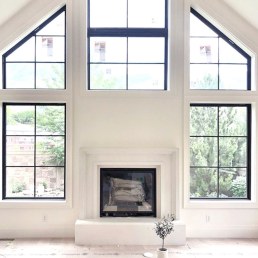
The firebox is a black rectangle in the middle of whatever you choose, and it sets the contrast for the entire piece. A pale surround around a black firebox is a high-contrast composition whether you meant it that way or not.
Clean-lined contemporary surrounds lean into that. Softer rooms usually want a mid-tone that narrows the gap, which is why the two most popular cast stone designs we ship are never the palest option on the card.
What Finish Means for Cast Stone Designs
Finish is the part buyers ask about least and notice most.
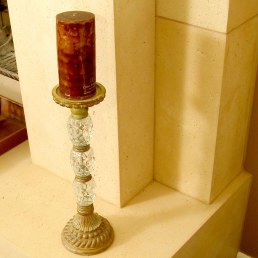
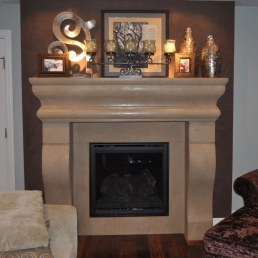
The surface is fine and slightly open. It isn’t polished like marble, and it isn’t rough like split-face stone. Under downlighting, it stays even rather than glaring, which is why it photographs so well and why it suits rooms with a lot of glass.
Every piece ships sealed with a concrete sealer. That’s not a gloss coat, and it won’t change the color. What it does is slow absorption, because the material stays porous underneath.
Red wine, cooking oil, and soot can all stain an unsealed or long-unsealed surface, and the fix is prevention rather than repair. High-traffic and exterior pieces want resealing about once a year, which we cover in our guide to maintaining a stone fireplace mantel.
Two things to avoid: sanding and abrasive cleaners. Both cut into the sealed surface and leave a patch that reads lighter than everything around it.
Order the Samples First
We’d genuinely rather you spend a week with a sample than commit from a photograph.
Set it on the hearth. Look at it in the morning and again with the lamps on. Hold it against the floor, the trim, and the wall. If it still looks right on day five, it’s right.
Ready to narrow it down? Order color samples from our shop, or tell us about your room and we’ll suggest two or three worth looking at.
Frequently Asked Questions
A: Eight: Mist, Natural, Olympus, Oyster, Pueblo, Steel, Summit, and Urban. They’re integral colors, meaning the pigment runs through the material rather than sitting on the surface.
A: It can be painted, but you’d be covering a mineral surface with a coating, and you’d lose the depth that makes cast stone look like stone. Refinishing by sanding isn’t an option, since abrasives damage the sealed surface. Choosing carefully up front is the better path.
A: Cast stone is made from natural aggregates and mineral pigments, and small variations between pours are normal. It’s the same characteristic people pay extra for in natural limestone. On a multi-piece surround, you’ll notice it at close range and stop noticing it from across the room.
A: Yours arrives sealed. Interior mantels in ordinary use generally don’t need much beyond that. Exterior pieces and anything in a high-traffic spot do better with a fresh coat of concrete sealer about once a year.
A: Yes, and we’d encourage it. We sell 5″ x 5″ samples cut from the same material we cast mantels from, so what you’re holding is what you’d get.
Still deciding? Browse the full color range, then order the two or three samples you keep coming back to.