

Cast Stone Fireplace Mantels: How Long They Actually Last
Ask how long a mantel lasts and you’ll get a number with no conditions attached. Decades. A lifetime. Forever, if the brochure is feeling confident.
Cast stone fireplace mantels really do outlive most of what else goes on that wall. But the number isn’t the useful part. What’s useful is knowing which parts of the material age, which parts don’t, and the handful of things that turn a fifty-year piece into a fifteen-year one.
Here’s what happens to a cast stone mantel over time.
What a Cast Stone Mantel Is Actually Made Of
At bottom, cast stone is a concrete product cast in a mold to look like cut limestone. Ours are glass fiber reinforced. Alkali-resistant glass fibers run through the mix instead of steel bar running through the middle, and that distinction is the reason a cast stone mantel ages the way it does rather than the way a reinforced concrete lintel does.
That one substitution drives most of what follows. Steel is what corrodes in traditional reinforced concrete, and corroding steel expands and cracks the material around it. Take the steel out and you’ve removed the most common long-term failure mode before the piece ever ships. It’s part of why we keep coming back to the advantages of precast concrete for mantels and surrounds.
The fibers also let us cast thinner sections, so the piece weighs up to 75% less than the same shape in traditional concrete. Lighter isn’t a durability claim by itself. It matters here because a lighter mantel puts less load on the wall and the fasteners holding it, and loose fasteners are a slow way to damage a mantel.
How Cast Stone Fireplace Mantels Age
Four things age differently, and they age at different rates. Worth taking them separately because people tend to worry about the one that matters least.
Heat and the Firebox
Non-combustible is the starting point. Our mantels allow zero clearance from combustible material, which is a stricter test than most rooms will ever put them through.
Heat is where the worry usually lands and where it’s least warranted. A household firebox doesn’t approach anything that troubles cast stone. Discoloration near a firebox almost always turns out to be soot or a sealer problem, not the stone giving up.
Color, All the Way Through
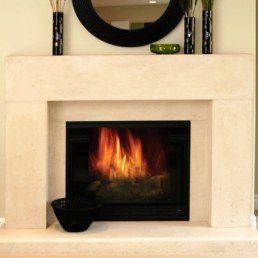
Pigment goes into the mix before casting, so it isn’t a coating. There’s nothing on the surface to chip off, peel, or fade away from a sunny window, and a scuff shows the same color underneath that you see on top.
What does shift is tone, very slightly, over many years of sunlight. It shifts evenly across the whole piece, which is why nobody notices. Compare a ten-year-old mantel to a new one of the same color, and you’ll see it. Look at the ten-year-old mantel on its own and you won’t.
Structure and the Wall Behind It
Special wall and floor reinforcement isn’t necessary for our mantels. That’s a statement about installation, and it has a durability consequence: a mantel that doesn’t need heroic support is a mantel that isn’t slowly working against the wall it’s mounted to.
When an older mantel does develop a structural problem, it usually traces back to installation rather than to the years since.
Moisture and Freeze-Thaw
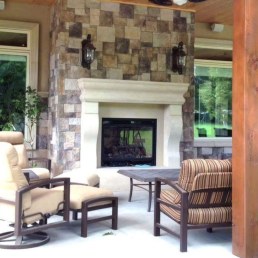
Indoors, this barely comes up. Outdoors, it’s the main event, and it’s why an outdoor mantel has to be designed to withstand the seasons rather than just moved outside.
Water that gets into any concrete product and then freezes will expand. Sealing is what keeps that from starting, and an unsealed exterior piece in a freeze-thaw climate is the one scenario where cast stone can be made to fail faster than it should.
What Shortens a Mantel’s Life
Three things, and none of them is the fireplace.
A rushed installation. Uneven bearing, over-tightened fasteners, or a piece forced to sit against a wall that isn’t flat all put stress into the stone that stays there. It shows up years later as a hairline at a joint, and by then nobody connects it to installation day. This is the single most preventable one, and it’s on the list of common fireplace renovation mistakes for good reason.
The wrong cleaner. Abrasive cleaners scour the surface texture off. So do glossy, surface-level sealers, which trap heat and cause discoloration rather than protecting anything. Mild soap and water are the whole routine, with a soft brush or vacuum for ash and soot. Our winter prep guide has the seasonal version, including the water-drop test for whether a piece needs resealing.
Damage left alone. A chip is a twenty-minute fill. The same chip after two winters of moisture working into it is a repair. The material is forgiving about being damaged. It is not forgiving about being ignored.
What Ownership Looks Like After the First Year
Almost nothing, which is the honest answer and a slightly boring one. Cast stone fireplace mantels ask very little once they are up.
Dust it when you dust the room. Wipe it with a damp cloth when something lands on it. Once a year, ideally before heating season, check the joints and look for gaps that weren’t there before. Reseal an exterior piece when water stops beading.
That’s the whole routine.
The color question comes up more than the maintenance question, and it’s worth thinking about at the start rather than later, because you’re choosing something permanent. Our stone color range is worth ordering samples from before anything gets cast.
When Durability Is Worth Paying For
Not every mantel needs to last fifty years. A rental turnover, a house you’re selling next spring, a room you already know you’ll redo: those are real situations where the durable option is the wrong spend.
Where it pays is the wall you’re not planning to touch again. A mantel is awkward to replace. It’s attached to the wall, it’s usually the visual anchor of the room, and swapping it pulls finishes with it.
Most people who end up reading about the signs it’s time to replace a mantel aren’t there because the material wore out. They’re there because it was the wrong material for a permanent position. That’s the case for cast stone fireplace mantels in a spot you intend to leave alone.
If that’s the wall you have, the question stops being how long the mantel lasts and starts being which one you want to look at for that long. Our stock mantel collection is the place to start narrowing.
Frequently Asked Questions
A: Decades, and there’s no built-in wear-out point. Nothing in it rots, corrodes, or burns. In practice, a cast stone mantel outlasts the room’s design far more often than it wears out, and most get replaced because tastes change.
A: It can, usually from impact or from stress put in during installation rather than from age. A hairline at a joint is worth looking at rather than ignoring, since moisture makes small damage bigger over time.
A: Not indoors, in most cases. Outdoors, yes, with a breathable penetrating sealer rather than a glossy surface one. Test by putting a few drops of water on the surface: if it darkens and absorbs quickly, it’s time.
A: Mild soap and water. Avoid anything abrasive, and skip the specialty stone polishes, which tend to build a film. A soft brush or vacuum handles ash and soot before you get anywhere near liquid.
A: No. The weight savings come from casting thinner sections, which the glass fiber reinforcement makes possible, not from using less capable material. The fibers give good impact resistance, and the piece handles normal household use without difficulty.
Planning something permanent? Send us the wall and the opening, and we’ll talk it through before anything gets cast.